2 hr
Third Reich & Cold War Walking Tour
- Expert local guide
- Small group
- Skip-the-line access
- Free cancellation
Berlin Walking Tour — Self-Guided Routes & Expert-Led Experiences
Trace the Wall, stand at the Gate, walk through centuries of history
Compare fares, pick the fit — all bookings are mobile-voucher and eligible for free cancellation where shown.
2 hr
2 hr
2 hr
| Experience | Duration | Rating | Skip-the-line | Guide | Small group | Free cancel. | Price | |
|---|---|---|---|---|---|---|---|---|
|
Guided Experience
Most popular
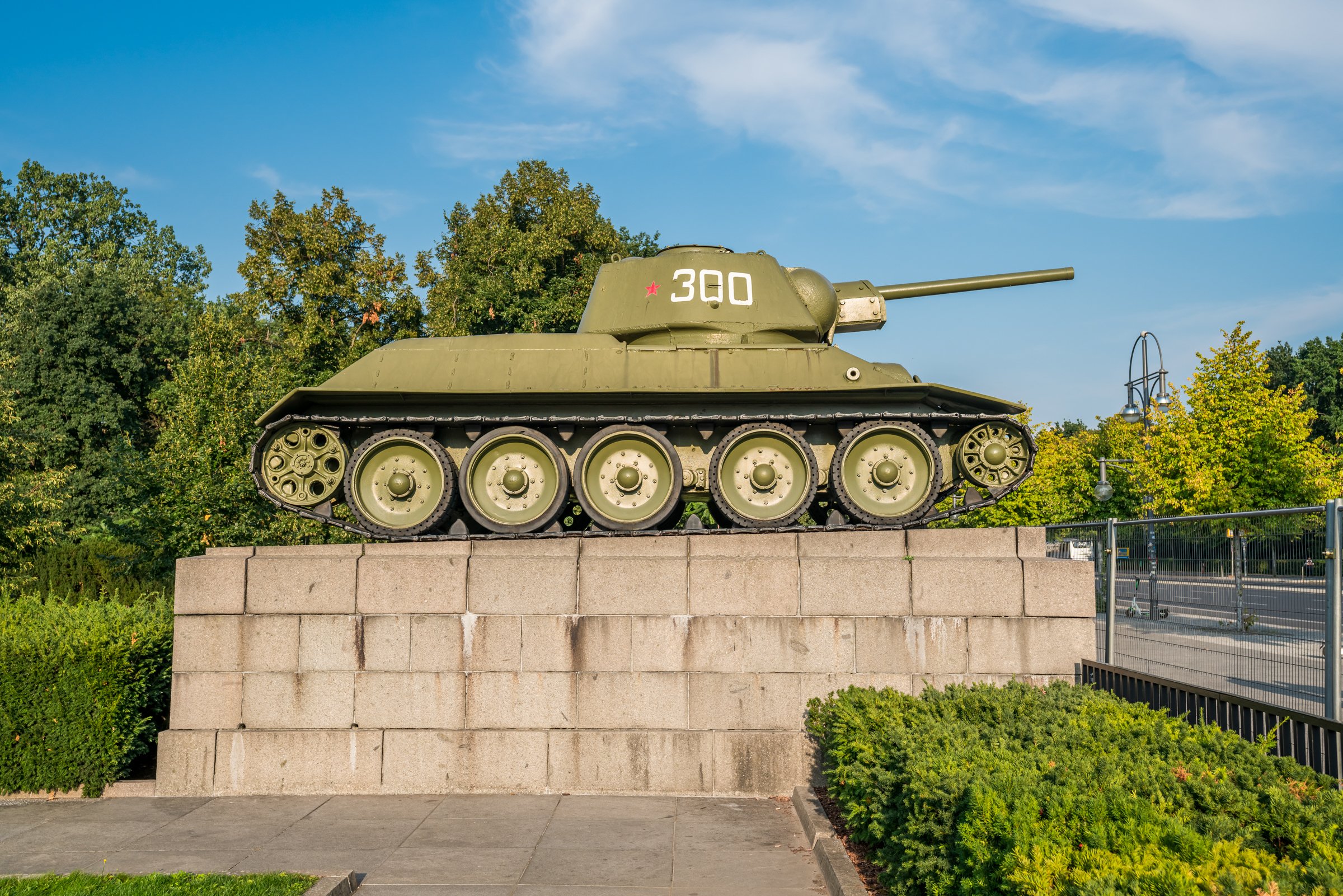
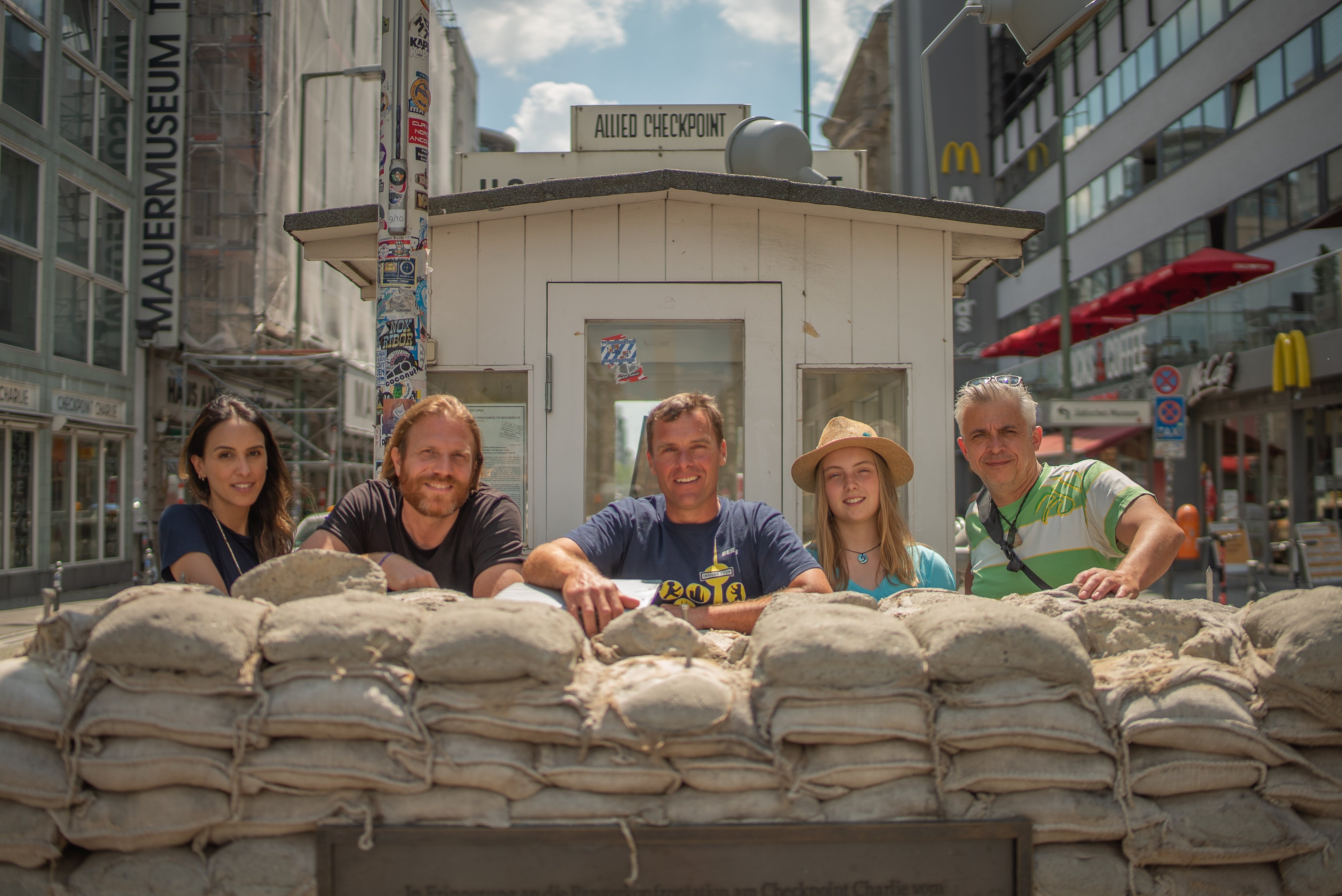
Third Reich & Cold War Walking Tour
|
2 hr | ★ 4.9 | ✓ | ✓ | ✓ | ✓ | €20 | Book → |
|
Guided Experience
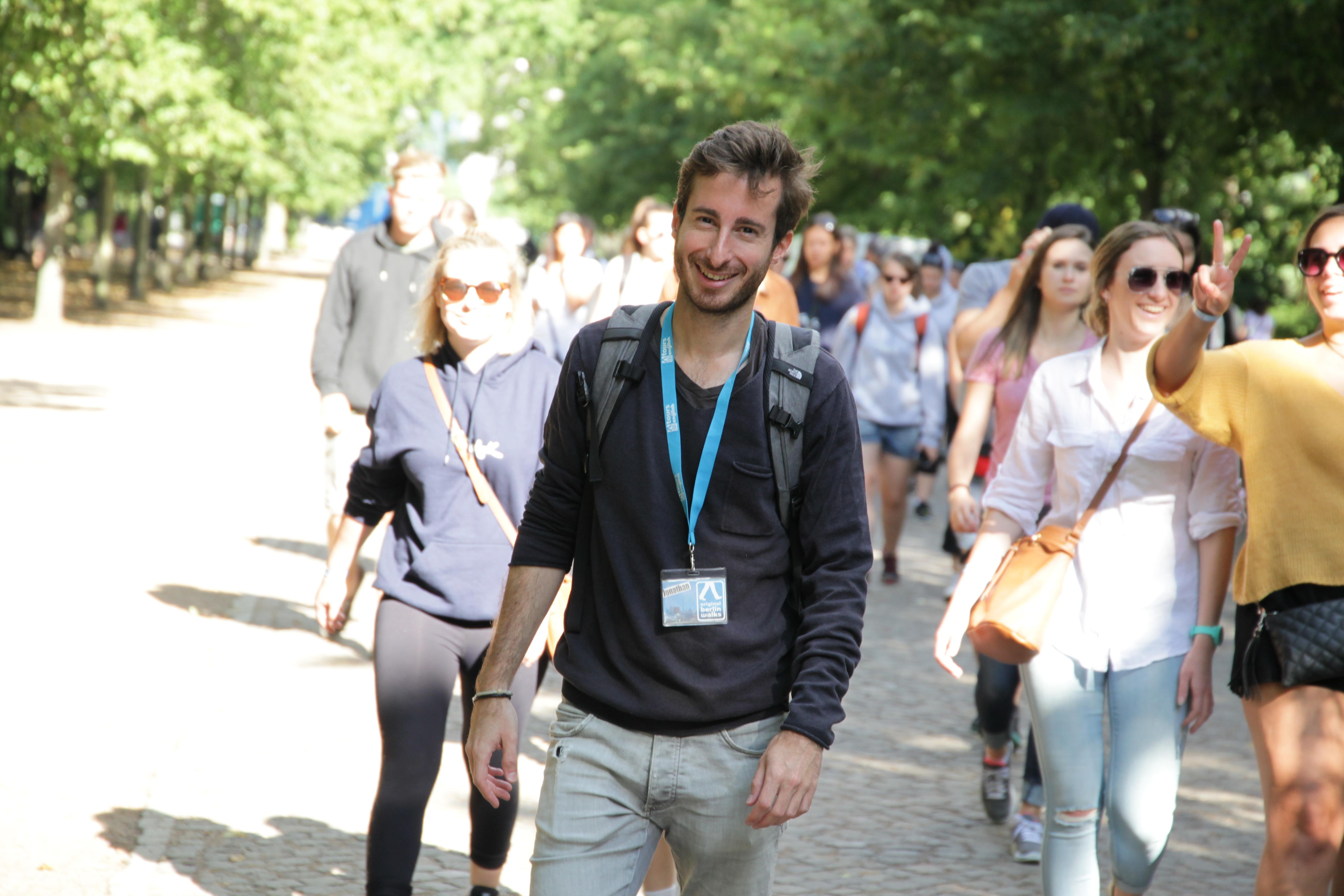
Discover Berlin Walking Tour
|
2 hr | ★ 4.9 | ✓ | ✓ | ✓ | ✓ | $23 | Book → |
|
Guided Experience
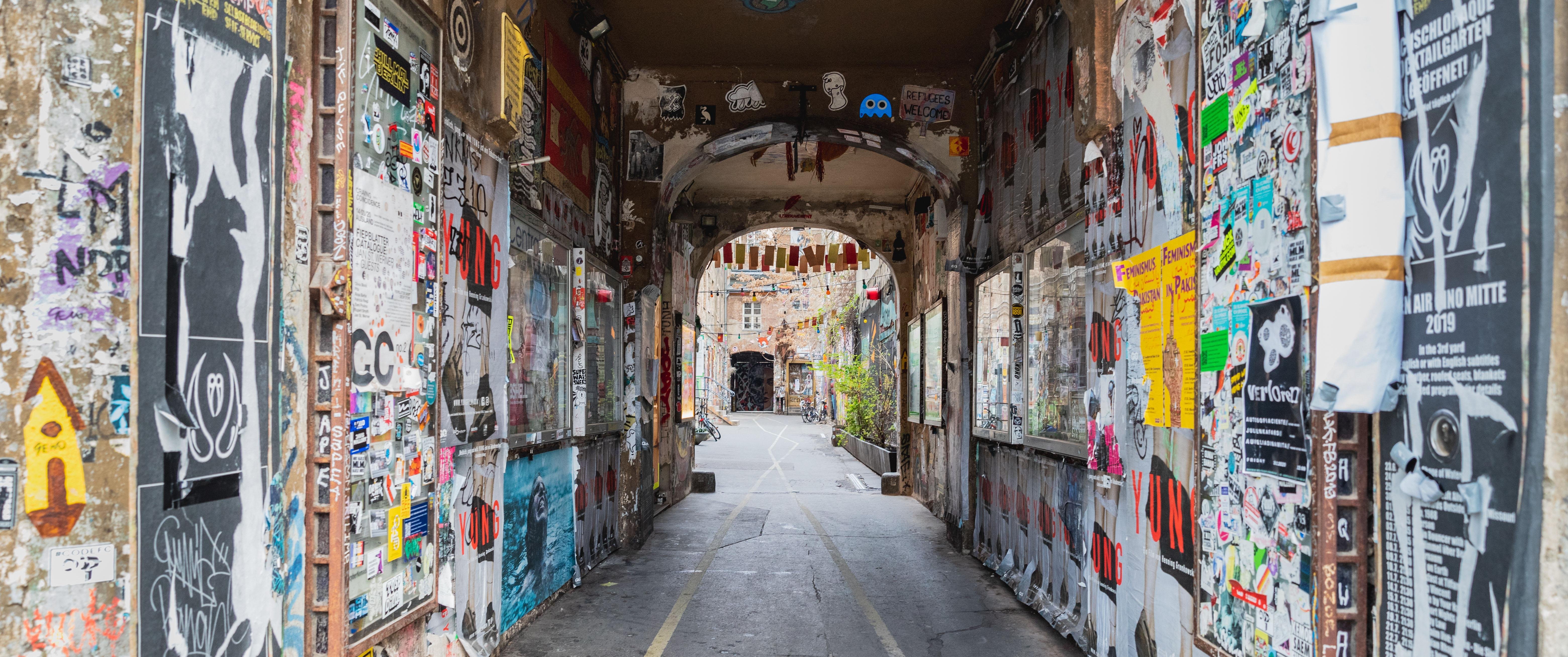
Hidden Courtyards Walking Tour
|
2 hr | ★ 4.8 | ✓ | ✓ | ✓ | ✓ | $23 | Book → |
They complement each other; most visitors who do both call the guided options more thrilling for context, while the self-guided route offers superior autonomy. A berlin walking tour allows you to explore the Brandenburg Gate at your own speed, whereas an expert-led Berlin city landmark tour provides deep archival insights.
|
Top pick Self-Guided |
Professional Guided Tour | |
|---|---|---|
| Flexibility | Complete freedom | Fixed schedule |
| Historical Depth | Depends on personal research | High expert narrative |
| Cost | 0 EUR | 15–30 EUR |
| Pacing | Your own speed | Strict group timeline |
| Group Interaction | None | High social engagement |
| Navigational Effort | High independence | None required |
| See tickets & prices |
Verdict: Choose the self-guided berlin walking tour tours for complete schedule control, or opt for professional berlin walking tour tickets when you prefer structured education and skip-the-line accessibility at key sites. Accessing a guided berlin walking tour tour remains the best way to uncover hidden details.
Hand-picked experiences loved by thousands of travelers
3 hours
Free Cancellation
Journey through Nazi Germany's rise and fall with expert historians at the regime's key sites
3 hours
Free Cancellation
Journey through Berlin's dramatic past with expert guides at the city's most powerful historical sites
2 hours 30 minutes
Free Cancellation
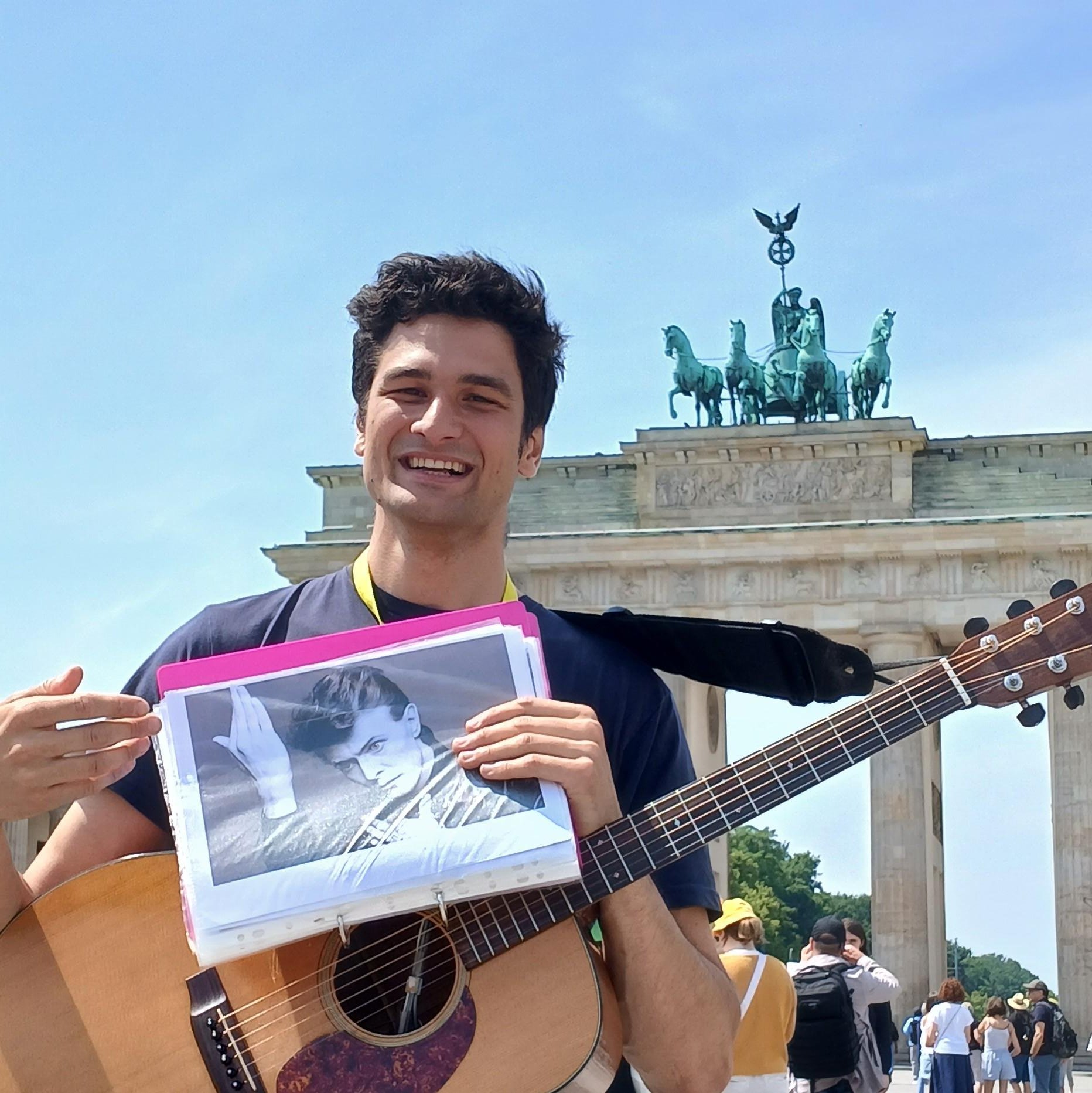
Experience the city's tumultuous past through live songs performed at iconic landmarks across the capital.
4 hours
Free Cancellation
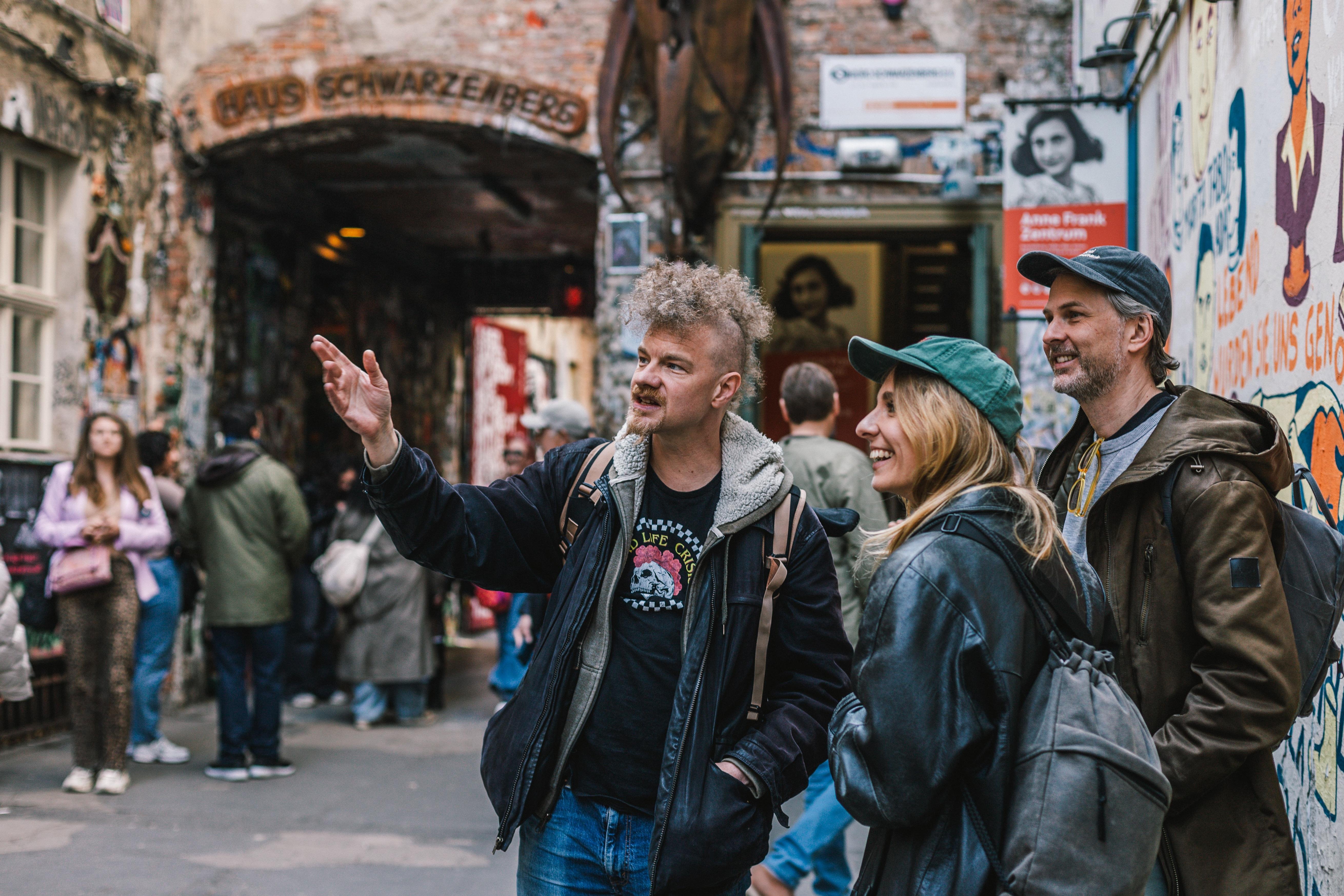
Explore the city's vibrant subcultures, street art, and multicultural neighborhoods on this local-led journey.
2 hours
Free Cancellation
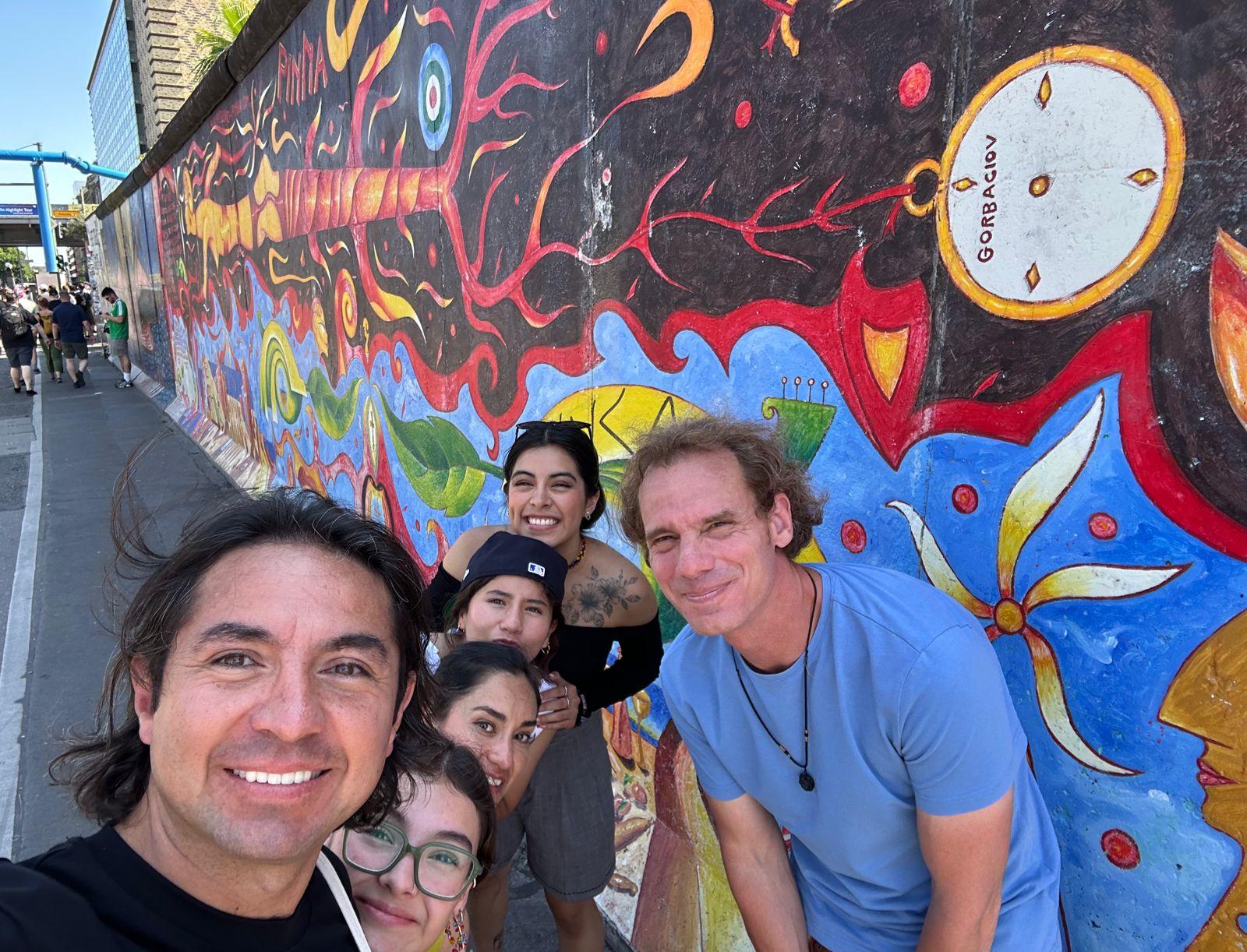
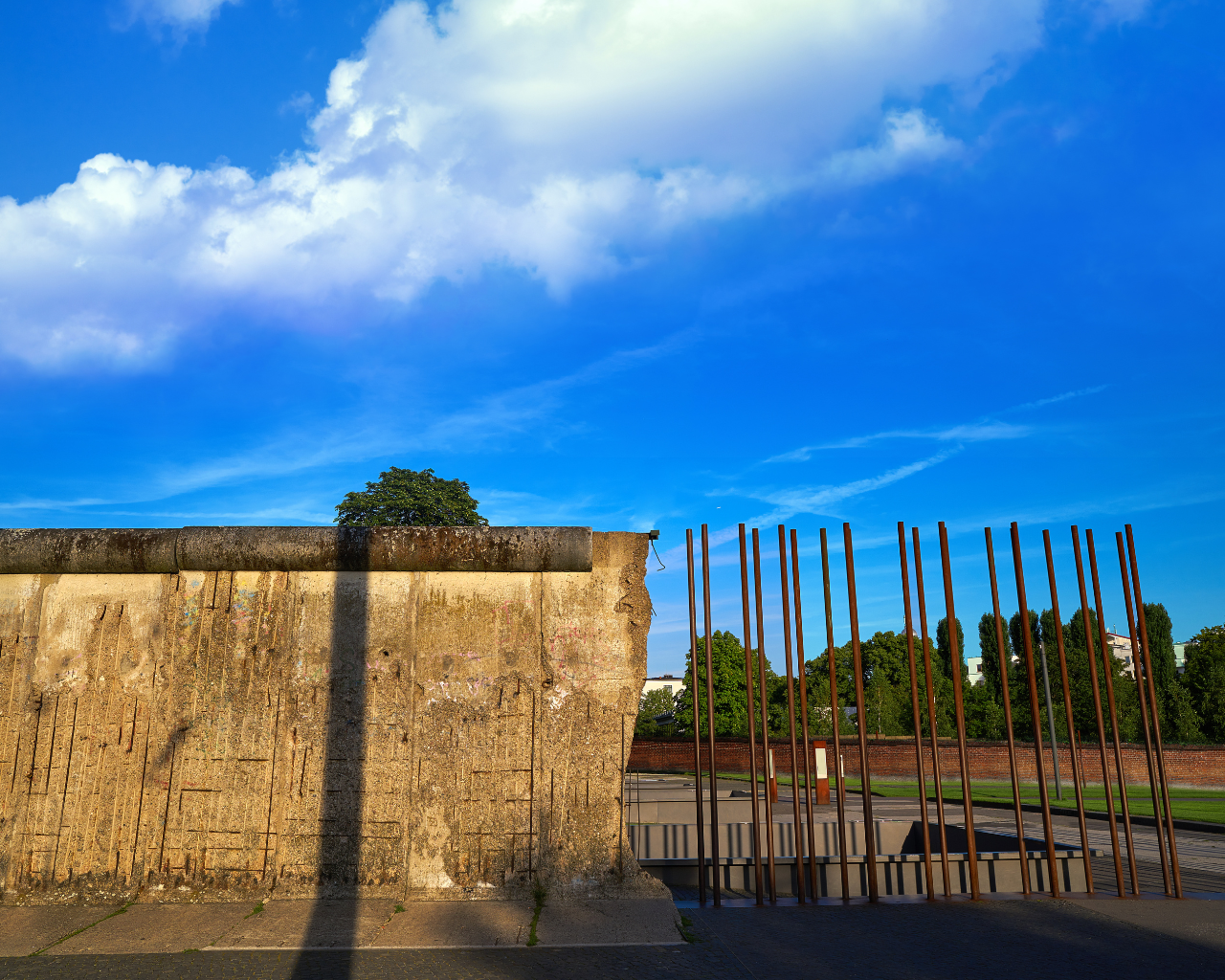
Explore Cold War history and vibrant street art along the iconic Berlin Wall remnants
3 hours
Free Cancellation
Explore divided Berlin's dramatic past with a historian guide through iconic Cold War sites
2-3 hours
Free Cancellation
Experience the German capital's landmarks after dark on a guided stroll through history and architecture
2 hours
Free Cancellation
Discover Berlin's journey from Prussian royal seat to modern reunified capital on this 2-hour walk
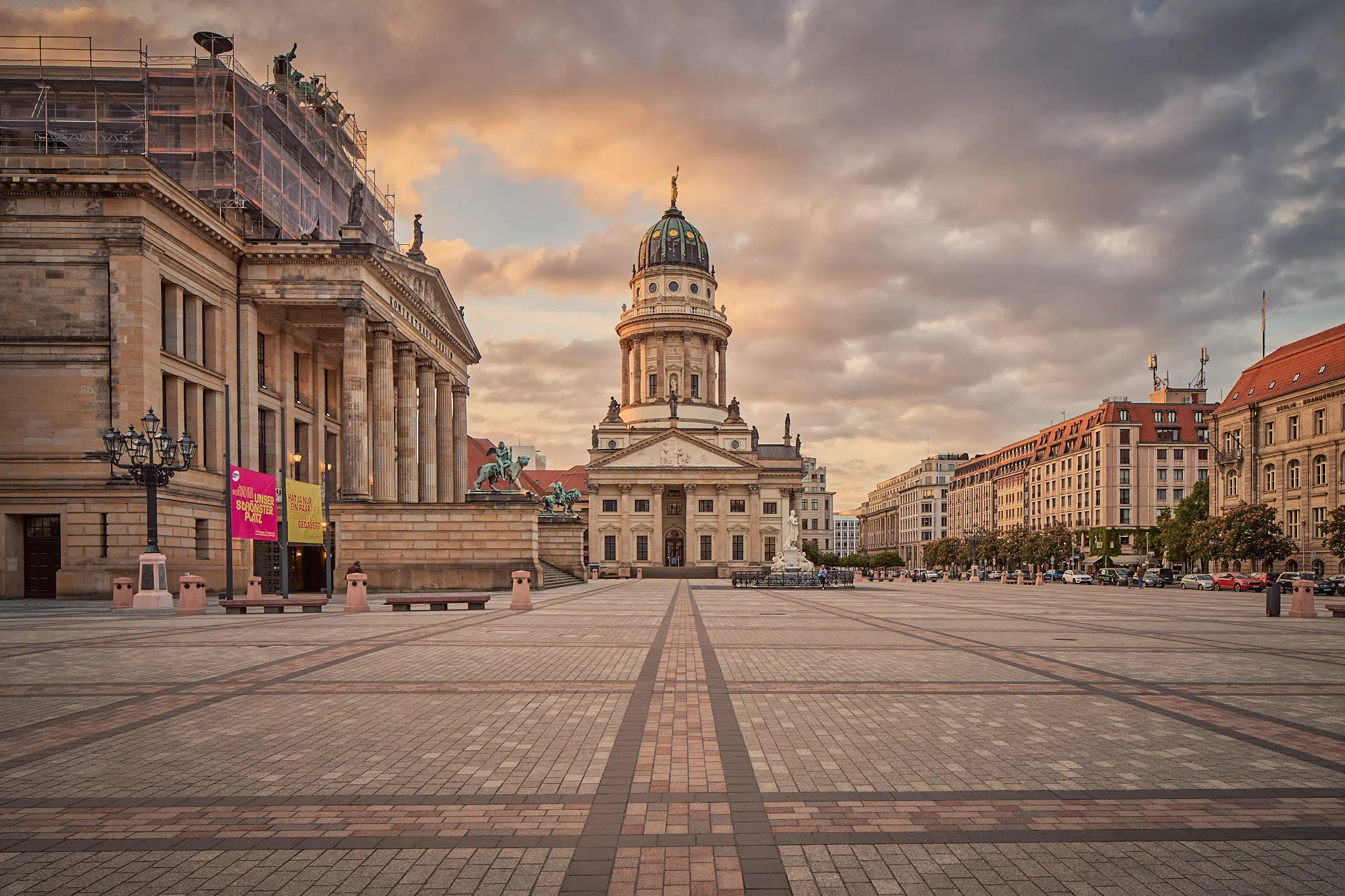
Begin your berlin walking tour at this historic square.
Examine the neoclassical architectural details.
Walk this iconic boulevard towards the city center.
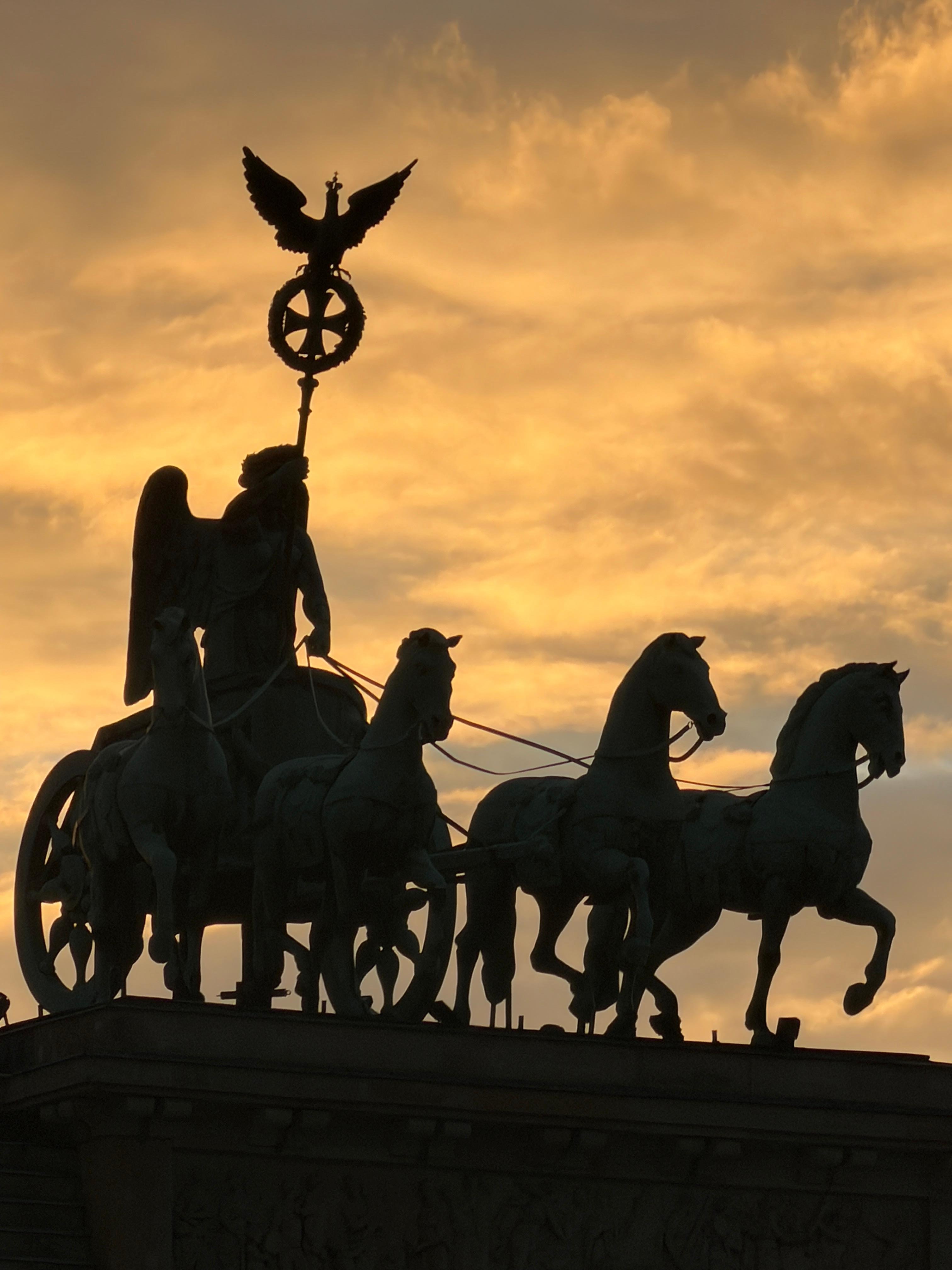
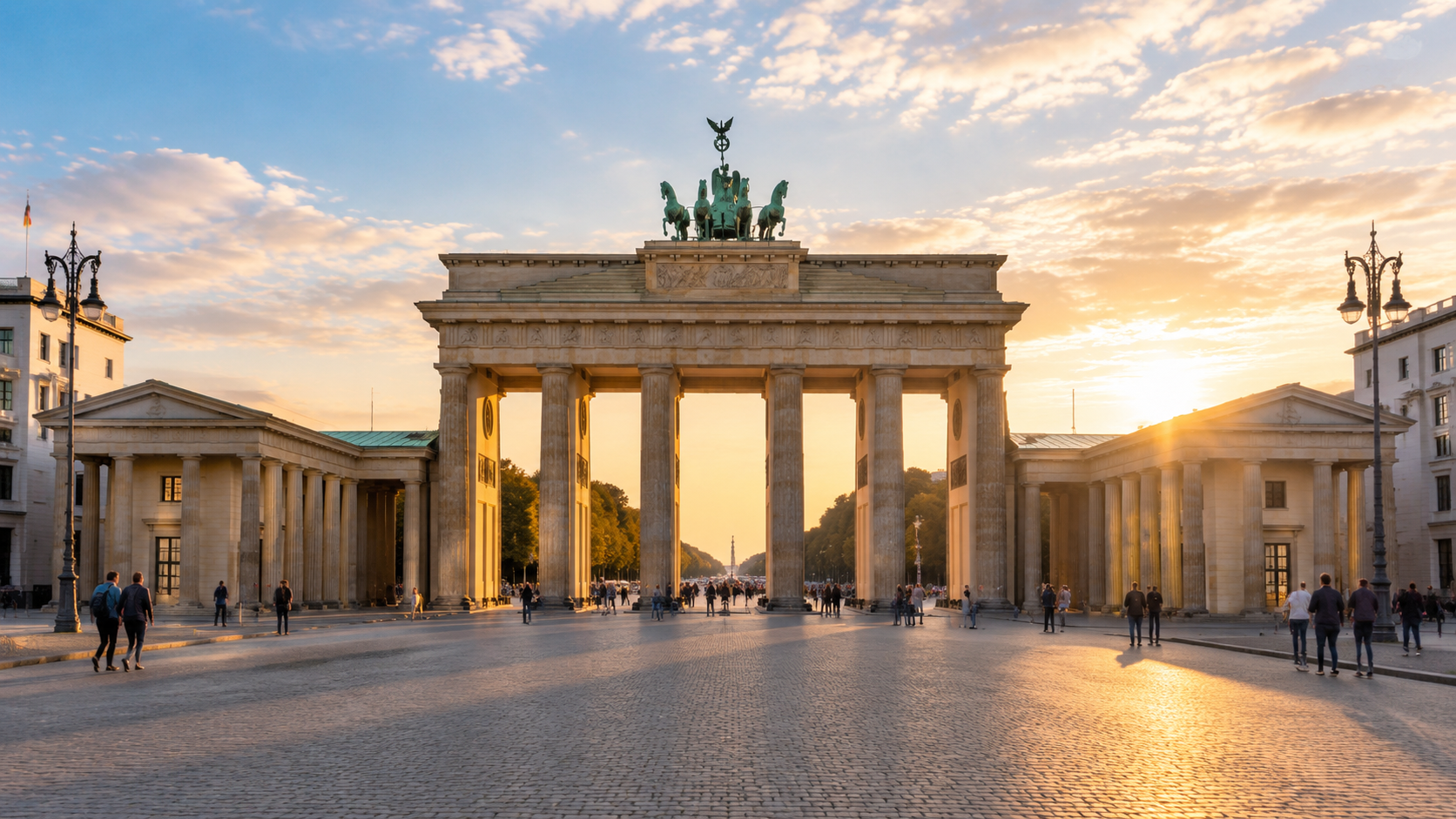
You arrive at Pariser Platz as the morning light angles across the Brandenburg Gate's twelve Doric columns. The Quadriga above you faces east, its four bronze horses frozen mid-stride. You pass beneath the central archway — once reserved for royalty, now open to everyone — and turn left onto Ebertstraße.
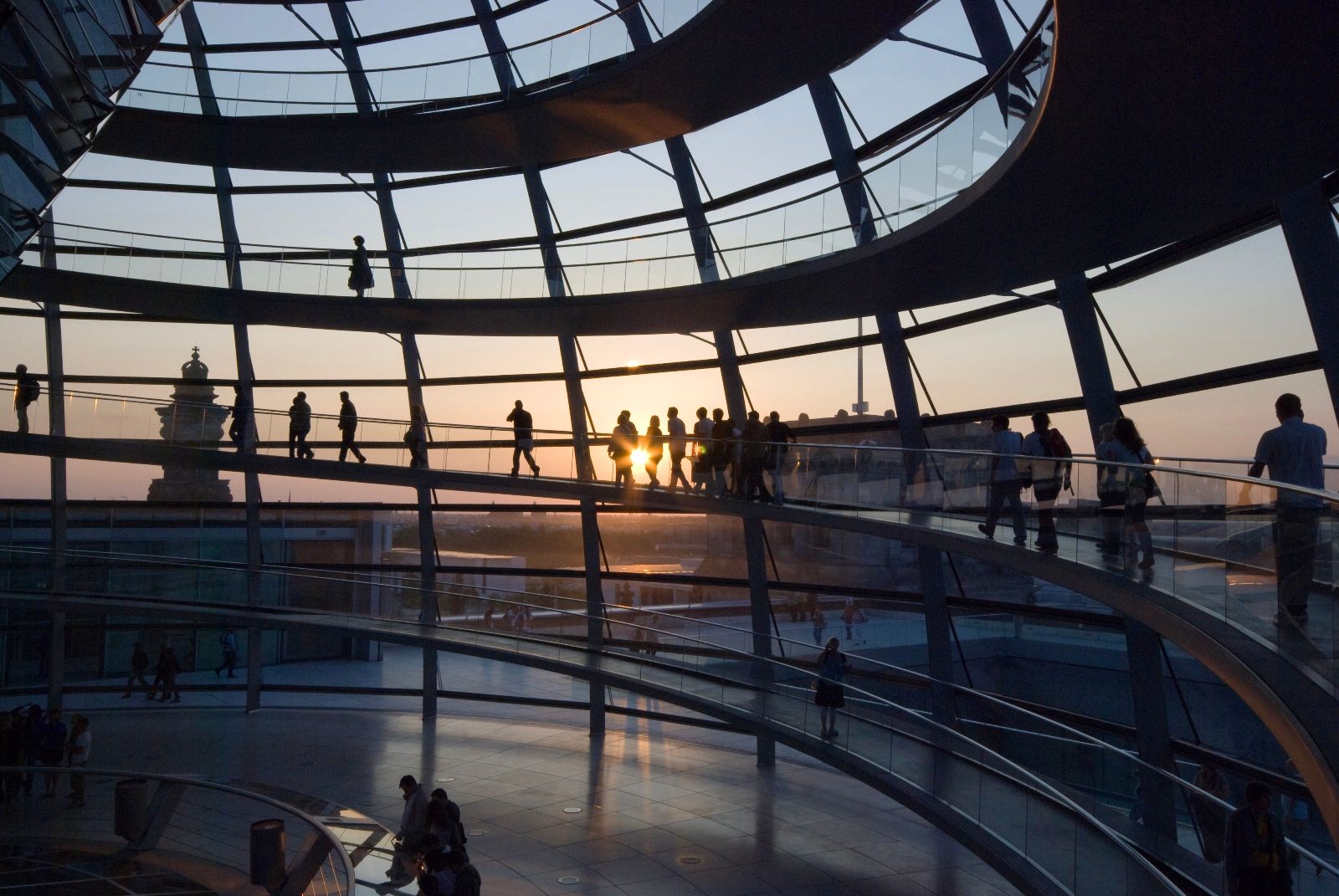
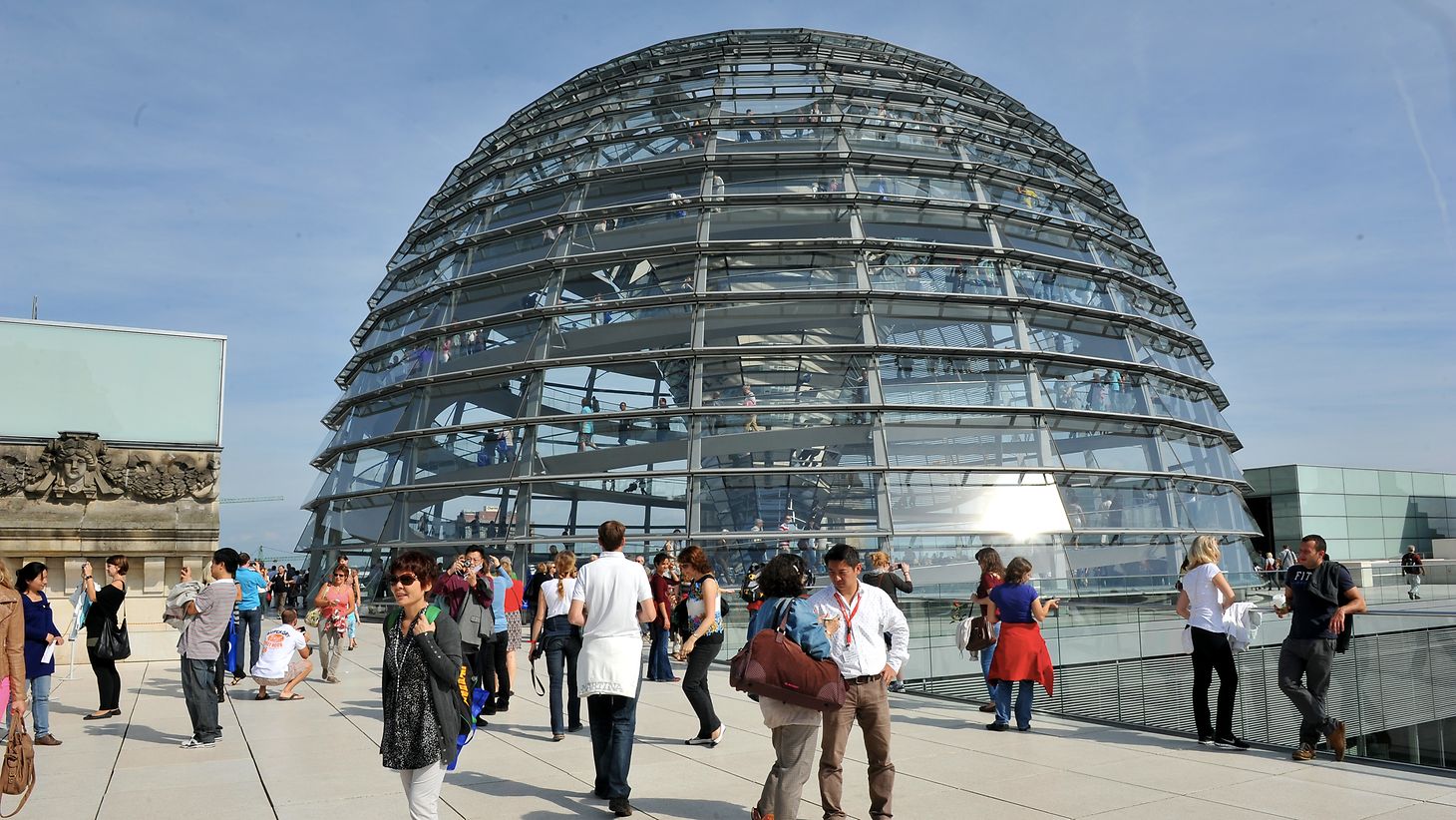
Within three minutes you reach the glass-and-steel dome of the Reichstag; if you've reserved a slot, you ascend the spiral ramp for a 360-degree view of the Spree and the government quarter.
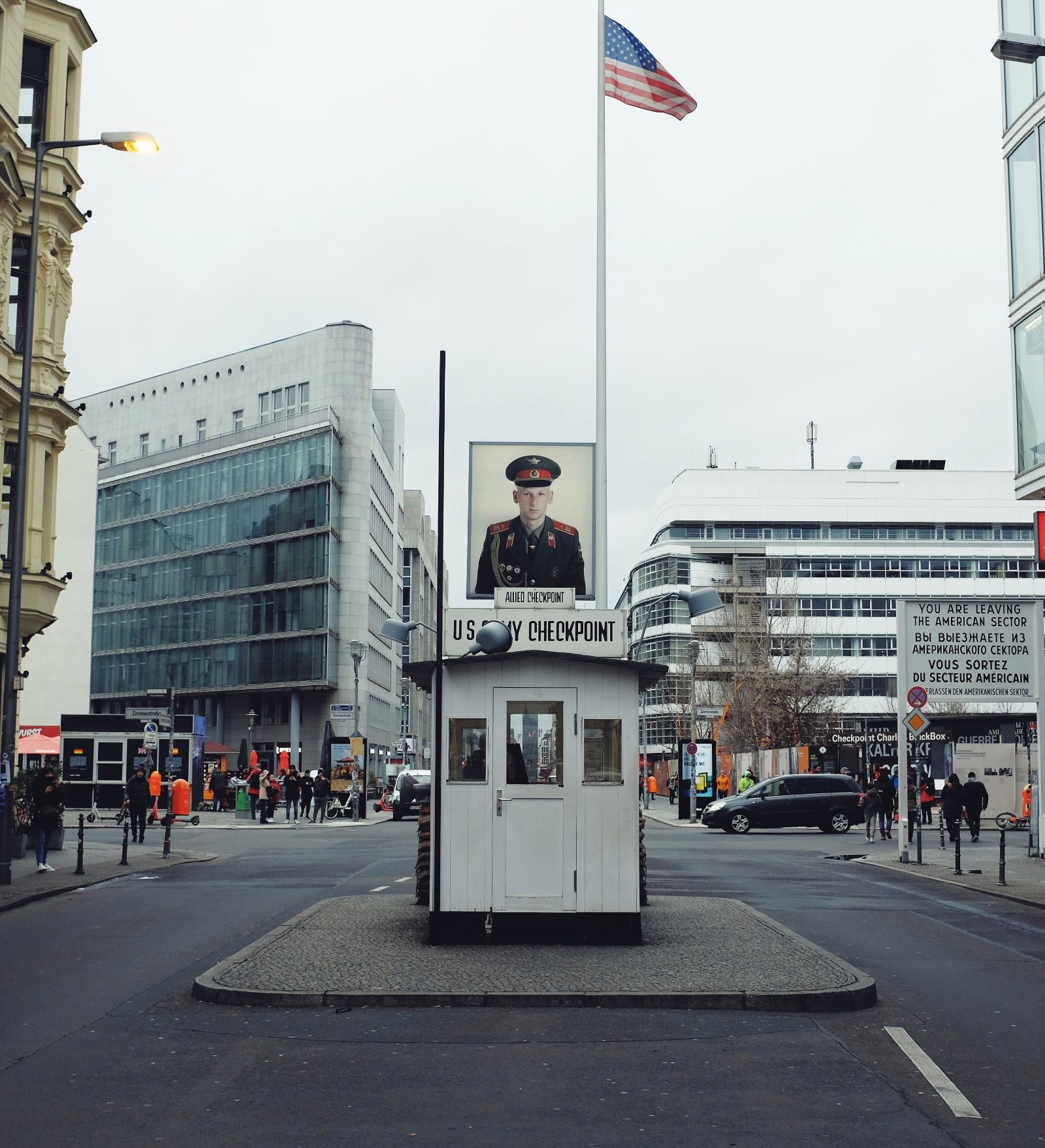
You double back south to the Memorial to the Murdered Jews of Europe. The stelae rise gradually as you walk deeper into the grid, the ground dipping, the concrete blocks climbing to twice your height. The claustrophobia is intentional. You emerge on the southern edge and cross Potsdamer Platz, its modern towers marking the site of prewar Europe's busiest intersection. Ten minutes later you stand at Checkpoint Charlie, camera raised toward the reconstructed guardhouse.
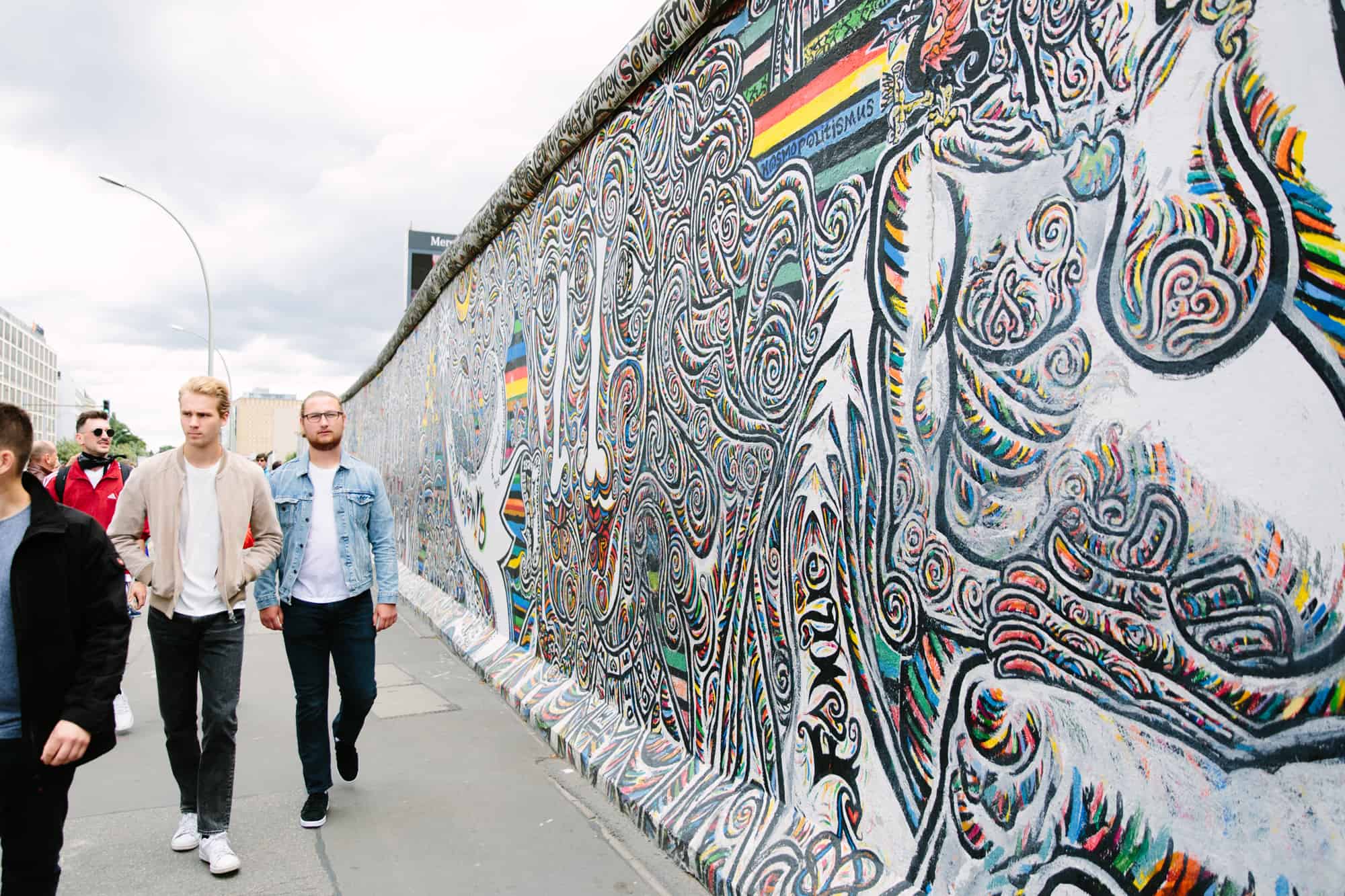
You continue east along Zimmerstraße to the Topography of Terror, where the open trench exposes cell foundations and an outdoor photo exhibition traces the mechanics of persecution. A kilometer farther, the East Side Gallery stretches along the Spree, graffiti and murals layered over Cold War concrete. You pause at the Fraternal Kiss, then walk the remaining length to Oberbaumbrücke, where the route ends and the cafés of Friedrichshain begin.
All the details about your upcoming adventure in one place
A berlin walking tour connects you with the German capital's layered past on foot, from the Brandenburg Gate to remnants of the Berlin Wall. These berlin walking tour tours move through Mitte and neighboring districts, highlighting Cold War landmarks, memorial sites, and architectural contrasts. Guides provide context on pivotal moments—division, reunification, Prussian heritage—making complex narratives accessible as you walk cobblestone streets and modern plazas.
The Brandenburg Gate stood at the edge of no-man's-land for twenty-eight years, its neoclassical columns bisected by concrete and barbed wire.
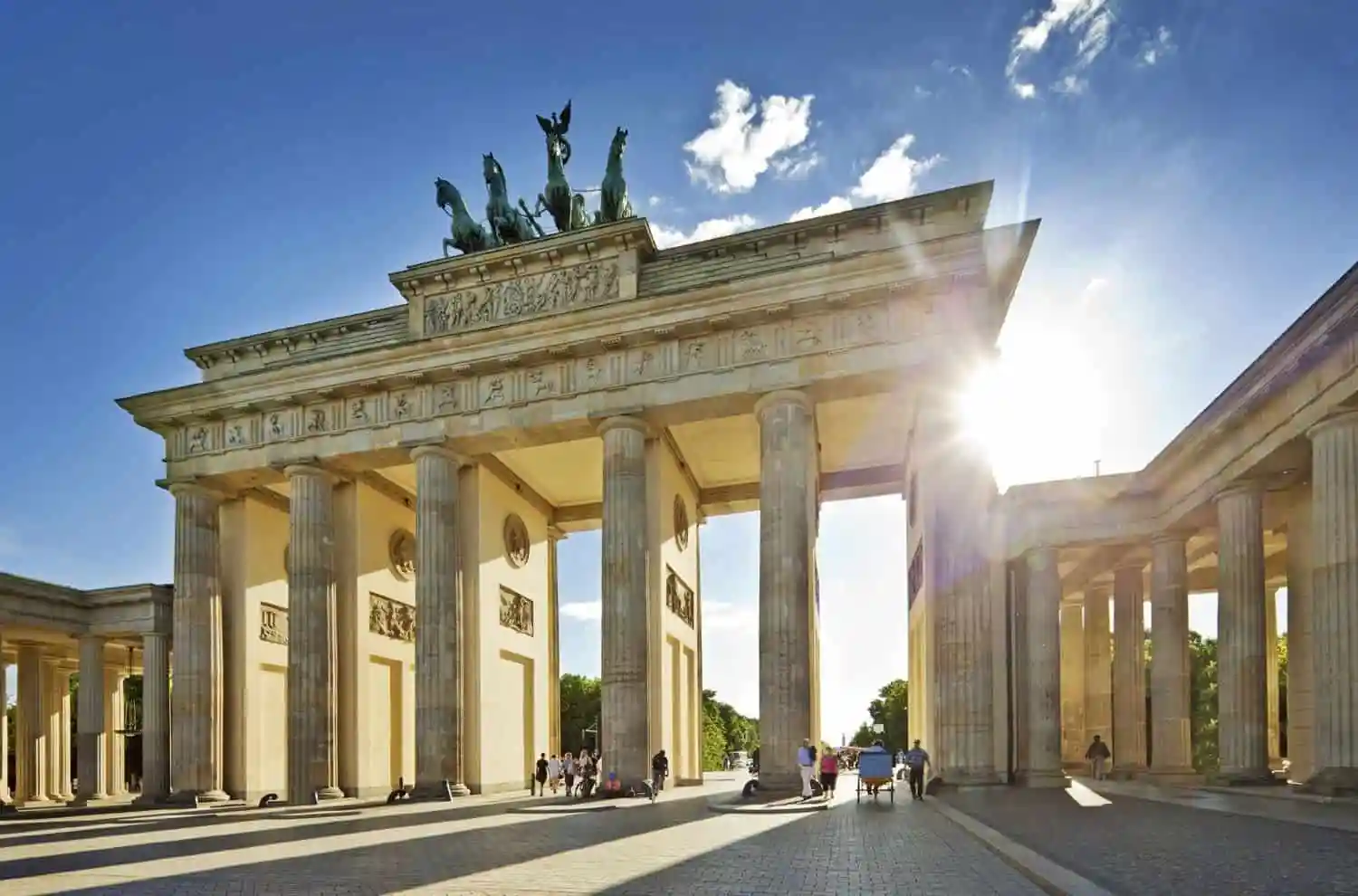
Commissioned in 1791 by Friedrich Wilhelm II and designed by Carl Gotthard Langhans, the sandstone monument was modeled after the Propylaea of Athens, crowned with Johann Gottfried Schadow's copper Quadriga — a chariot driven by the goddess of victory. Napoleon claimed the sculpture as war booty in 1806; Prussian troops brought it home eight years later. By 1961, the Gate became the most visible symbol of division, inaccessible to East and West alike, a backdrop for Cold War speeches and clandestine crossings. Today it anchors Pariser Platz, the ceremonial start of Unter den Linden, and serves as the natural threshold for anyone setting out on a Berlin walking tour.
Beyond the Gate, the city unfolds as a palimpsest of empire, dictatorship, partition, and reunification. A self-guided berlin walking tour route typically covers four to six kilometers, threading through Mitte's grid of boulevards and courtyards. The Reichstag dome, designed by Norman Foster and opened in 1999, offers a spiral ramp encircling the parliamentary chamber below — a deliberate inversion of power, glass above stone. Southward, the Memorial to the Murdered Jews of Europe occupies 19,000 square meters with 2,711 concrete stelae, each slightly different in height, creating a field that is both ordered and disorienting. Peter Eisenman's design invites no single interpretation, only movement and reflection.
Checkpoint Charlie, once the sole crossing point for Allied personnel, now sits surrounded by cafés and a reconstruction of the guardhouse. Nearby, the Topography of Terror exhibition occupies the former headquarters of the Gestapo and SS, its open-air trench exposing the foundations of administrative evil. Farther east, the East Side Gallery preserves 1.3 kilometers of the Berlin Wall along Mühlenstraße, its concrete panels transformed into the world's longest open-air gallery. Dmitri Vrubel's Fraternal Kiss and Birgit Kinder's Trabant breaking through remain among the most photographed segments.
A walking tour of Berlin in English typically lasts three to four hours, though the availability of free printed maps and downloadable PDFs allows walkers to set their own pace. The architecture rewards sustained attention: Schinkel's Altes Museum, Liebeskind's Jewish Museum, the Fernsehturm's sphere rising 368 meters above Alexanderplatz. Each structure compresses a different chapter, and the intervals between them — courtyards, bridges, squares — allow time for the narrative to settle.

The Brandenburg Gate stood at the edge of no-man's-land for twenty-eight years, its neoclassical columns bisected by concrete and barbed wire.
Wear comfortable walking shoes suitable for cobblestone streets and pavement.
Participants must carry their own belongings at all times as there are no storage facilities provided for this berlin walking tour.
Photography is permitted at all public landmarks visited during your berlin walking tour.
Strollers are easily accommodated throughout the berlin walking tour route. Most landmarks provide open outdoor space for children.
The berlin walking tour route utilizes public sidewalks and pedestrian zones designed for accessibility. Curb cuts are present at most major intersections.
External food and beverages may be consumed in public areas, but please dispose of all waste in designated bins to maintain city cleanliness.
Opening Hours
00:00–23:59
Address
Brandenburg Gate, Pariser Platz, 10117 Berlin, Germany
Accessibility
Full wheelchair access across major city squares
Best Arrival
08:00–10:00
Navigation
Follow self-guided routes via official site
Public transport · 5 min · 3 EUR
Use S-Bahn or U-Bahn lines to Brandenburger Tor station.
Taxi · 15 min · 20 EUR
Request drop-off at Pariser Platz for direct access.
As this berlin walking tour is a self-guided experience, no reservations or cancellations are required. Entrance fee is 0 EUR.
Recommended time
2-3 hours
A comprehensive berlin walking tour typically requires two to three hours to cover the major landmarks near Pariser Platz and the surrounding government district. We suggest allocating extra time for reading plaques or taking photographs, as this berlin walking tour tour allows for a self-paced exploration. You will find that visitor volume increases significantly by mid-morning, making early arrival essential for a seamless experience.
Crowd levels through the day
Weather · crowds · average price — dots go green to amber to red as each metric rises.
September offers mild temperatures and fewer crowds for a berlin walking tour.
Start your berlin walking tour between 08:00–10:00 to avoid mid-day crowds.
Pariser Platz, 10117 Berlin
Primary starting point for the berlin walking tour.
Get directionsThe Brandenburg Gate, erected between 1788 and 1791 by Carl Gotthard Langhans, anchored the western terminus of Unter den Linden and marked the ceremonial entrance to Berlin. Frederick William II commissioned the neoclassical sandstone arch to symbolize peace, crowned by Johann Gottfried Schadow's Quadriga—a copper chariot drawn by four horses. The gate stood at the edge of Pariser Platz, named after the Prussian victory over Napoleon in 1814, and became the processional route for Prussian kings and later German emperors. By the early nineteenth century, walking tours through this district connected the royal palace to the Tiergarten, tracing the axis of Prussian power. The gate survived the revolutions of 1848 and the unification of Germany in 1871, but the twentieth century shattered its symbolism. Nazi torchlight parades streamed through the arch in 1933, and Allied bombing reduced much of Pariser Platz to rubble by 1945. The Soviet military hung a red flag from the Quadriga in May of that year. When the Berlin Wall rose in 1961, the gate stood trapped in the death strip between East and West, inaccessible to pedestrians on either side. For twenty-eight years, no berlin walking tour could pass beneath it. The Wall fell on November 9, 1989, and within weeks crowds surged through the gate in both directions. Restoration began in 2000, removing decades of grime and repairing bullet scars in the sandstone. Today, the gate anchors a network of self-guided berlin walking tour routes that extend east to Museum Island and west into the Tiergarten, threading together fragments of Prussian grandeur, Nazi terror, Cold War division, and reunification. Pariser Platz was rebuilt with embassies and the reconstructed Hotel Adlon, erasing the no-man's-land that once surrounded the arch. The cobblestones now carry millions of visitors annually, walking the same axis that once belonged to emperors and soldiers.
Carl Gotthard Langhans completes the Brandenburg Gate as a neoclassical arch symbolizing peace, crowned by Schadow's Quadriga.
Pariser Platz receives its name after Prussian forces defeat Napoleon, and the gate becomes a triumphal monument.
Nazi torchlight parades march through the gate on January 30, marking the beginning of the Third Reich.
Allied bombing reduces Pariser Platz to ruins; Soviet forces raise a red flag from the Quadriga in May.
The Berlin Wall isolates the gate in the death strip, closing it to all pedestrian traffic for twenty-eight years.
The Wall falls, and crowds stream through the reopened Brandenburg Gate in both directions.
A comprehensive restoration removes Cold War damage and returns the sandstone to its original color.
Stand in the center of the square to frame the sandstone columns with the central chariot statue. This perspective provides the most symmetrical composition for any berlin walking tour.
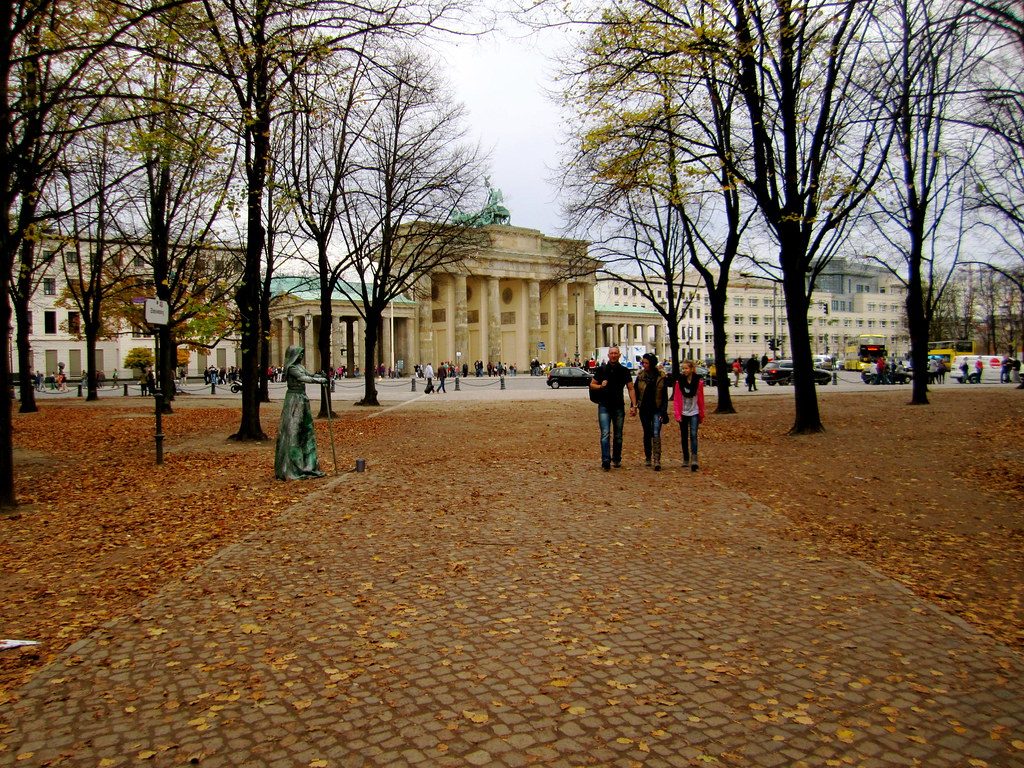
Position yourself on the grass near the edge of the Tiergarten looking back toward the neoclassical structure. This vantage point captures the architecture against the lush greenery of the surrounding parkland.
Walk slightly south to capture the gate from a lower perspective using the street lines to lead the eye. This angle helps isolate the monument from crowds often found on the berlin walking tour tours.
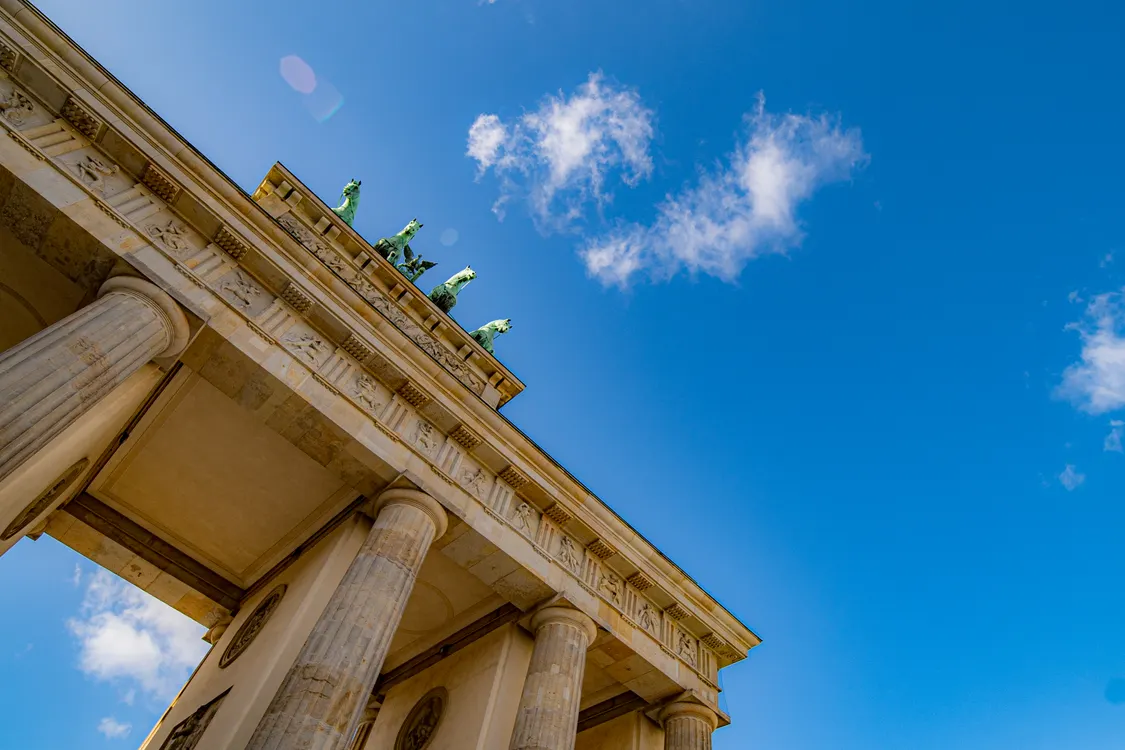
Stand directly under the archway looking upward to photograph the intricate ceiling coffers and the transition between city sides. This location is part of most standard berlin walking tour tour routes.
Finding a quality meal near your berlin walking tour is straightforward, as the area surrounding Pariser Platz features several established eateries. You can explore these berlin walking tour tours by walking just a few minutes toward Unter den Linden for diverse culinary options.
This classic venue offers traditional Austrian and German dishes in a sophisticated setting. It is a popular spot for visitors to rest after their berlin walking tour tour while enjoying coffee and cake.
Located along the Spree, this lively place serves regional specialties like currywurst and Kölsch beer. It is often busy, so secure your berlin walking tour tickets for nearby museums in advance to manage your schedule better.
A convenient stop for quick sandwiches, bagels, and hot beverages near the government district landmarks. It serves as a practical choice for those wanting to maintain momentum during their city exploration.
Real experiences from real travelers
Our guide led us through Mitte and Kreuzberg with sharp historical insight. The berlin walking tour covered Brandenburg Gate, the Holocaust Memorial, and sections of the Wall in under four hours. We walked at a comfortable pace even in August heat.
The route took us from Potsdamer Platz to Checkpoint Charlie with detailed stories about the divided city. Our guide answered every question about the GDR era. I learned more in three hours than I would have from a guidebook.
We joined a morning tour that began at the Reichstag and wound through the government quarter. The guide's explanations of Prussian and Weimar history added depth to every landmark we passed. Well worth the early start.
The berlin walking tour tours hit all the major sites in a logical sequence. Our group was large but the guide used a headset system so everyone could hear. I would have preferred more time at the Memorial to the Murdered Jews of Europe.
Our guide brought the history of the Wall and reunification to life as we walked from the Brandenburg Gate to the East Side Gallery. The berlin walking tour tickets included a small group size which made questions easy. The pacing allowed for photos without feeling rushed.
We explored the Unter den Linden boulevard and learned how each building reflects a different political era. The guide pointed out details on facades I would have walked past. A thoughtful route through layers of Berlin history.
The tour connected Alexanderplatz, Museum Island, and the Nikolaiviertel in a way that made sense of the city's layout. Our guide explained the reconstruction after wartime destruction. The three-hour format was just right.
We walked the former border between East and West, stopping at Checkpoint Charlie and remnants of the Wall. The guide's personal stories about life in divided Berlin added emotional weight. One of the better historical walking experiences in Europe.
The berlin walking tour tour took us from medieval Nikolaiviertel through Prussian monuments to modern Potsdamer Platz. Our guide balanced architecture, politics, and daily life anecdotes. I left with a clear sense of the city's evolution.
We covered the key landmarks of central Berlin in under four hours without feeling hurried. The guide's command of English and German history was solid, and the route avoided backtracking. A smart way to orient yourself on a first visit.
Everything you need to know for your journey
The entrance fee is 0 EUR for self-guided routes.
The site is open 00:00–23:59 every day, making a berlin walking tour highly flexible.
The best arrival window is 08:00–10:00 to avoid mid-day crowds.
Yes, the public streets used for the berlin walking tour are generally wheelchair friendly.
Yes, pets are welcome in the public spaces visited during a berlin walking tour.
Yes, you are welcome to take photos of all landmarks on your berlin walking tour.
The starting point is at Brandenburg Gate, Pariser Platz, 10117 Berlin, Germany.
Please avoid bringing drones or dangerous items on your berlin walking tour.
No, there are no tickets required for this self-guided berlin walking tour.
Yes, the berlin walking tour is family-friendly and suitable for all ages.
Seat of the German parliament featuring a glass dome.
Expansive grid of concrete stelae for contemplation.
The largest inner-city park in the capital.
Join thousands of happy travelers who have discovered this incredible experience
Book Your Experience Now